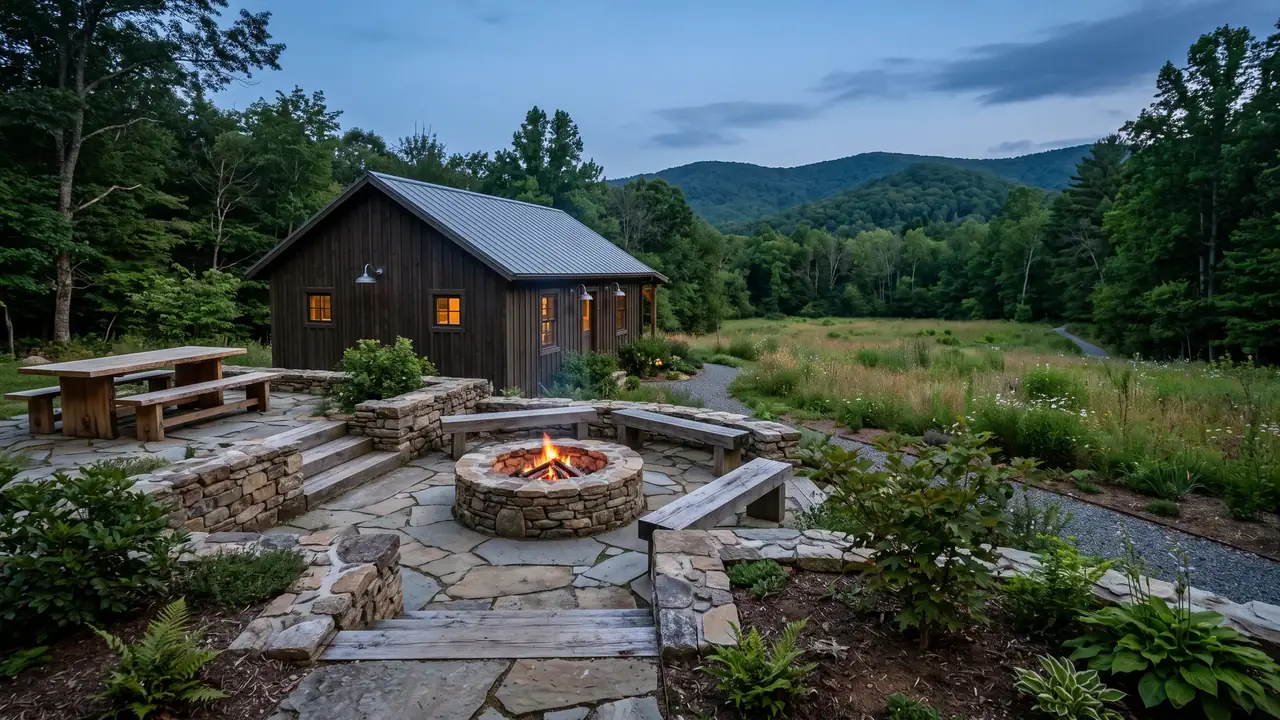
Walkway and outdoor step installation in Floyd, VA covers gravel paths, stone walks and steps up steep yards. Every option needs a contained edge and a base that drains, because freeze-thaw at the county's 18-inch frost line pushes loose edges out and heaves thin bases. Steps may raise handrail questions for the county building office. This site is not an installer; it names any provider before you agree.
A walkway, a set of outdoor steps, or a better route between house, patio, and yard is the subject of this page, written for the Floyd, Virginia homeowner. It covers what the work involves, how slopes, frost, and runoff shape the design here, and what to gather before describing the project. What you end up with is a project description a reviewer can read and, with your approval, carry to a named provider.
What does walkway and step installation in Floyd involve?
A walkway starts with the route, not the material. The path is set out where people actually walk - usually the straight line from the parking area to the door, and the line from the door to wherever evenings are spent - and then the ground is excavated along it, a compacted base is built, and pavers or stone are set with a slight cross-slope so water leaves the surface.
Steps are built into the same base logic, with each riser kept even and landings placed where the route rests or turns. Uneven risers are the single most common cause of stumbles on outdoor steps, and a base that settles makes them uneven within a few seasons. Where a walkway crosses a slope, the downhill side is held with compacted fill or a low wall; the retaining walls page covers that holding work.
When does a yard need a walkway or steps?
The obvious cases are a worn or muddy path, an arrival route from the driveway that turns to soup in rain, and a grade change between the house and the gathering area. The less obvious case is the dark route: people will use a patio and fire feature through the evening if the way back to the door is solid underfoot.
Walkways also earn their keep in winter. A solid, drained, shoveled path keeps its surface; a dirt or gravel route on this county's slopes turns to ice and mud exactly when it is needed most.
Why do walkway problems happen on this ground?
Slope comes first. Regional planning profiles classify the Blue Ridge Province, which includes Floyd County, as generally moderately sloped, in the 5 to 20 percent range, and a walkway crossing that ground either follows the hillside in gradual stages or turns into steps with landings. A route forced straight up a slope ends up steep, slippery, and washed out at the bottom.
Frost comes second. The Floyd County building office publishes an 18-inch frost line depth among its local design criteria, and freeze-thaw heaves whatever sits on a thin base. Walkway edges are especially exposed: an uncontained edge lets the base creep outward, and the first place it shows is a lip you catch with a shoe.
Water is third. This county is a headwater area - no streams flow into it, and the Little River gathers here from its forks - so yards shed runoff toward the drainages. A walkway that dams that runoff, or a step landing that sits in its path, will move within a few years. The walkways on a sloped lot guide goes deeper on layout.
What affects the cost of a walkway project?
- Length and width. An arrival path carries two people side by side; a far-yard path can be narrower.
- Steps and landings. Each flight adds excavation, base work, and cutting.
- Slope work. Filling and holding the downhill edge, or cutting the uphill side.
- Material. Pavers, natural stone, and gravel differ in both cost and setting labor.
- Base depth. Wet or soft ground needs more aggregate.
- Lighting and extras. Sleeves placed now cost little; cutting a finished walk later costs more.
Which surface suits a walkway here?
Pavers give a smooth, predictable surface that shovels cleanly and resets easily if the ground moves - the practical choice for arrival routes. Natural stone fits the older, weathered look common on the county's farms and ridges, at the cost of a less even walking surface and more fitting labor. Gravel drains and spreads easily for utility and far-yard routes, but it shifts, tracks, and is unpleasant under ice, so it rarely serves a front-arrival path well. Many yards use more than one: solid surface at the doors, stone or gravel farther out.
How do you prepare a walkway project request?
- Photos. The whole route from both ends, plus close-ups of the worst mud, ice, or wash spots.
- Route notes. Where people actually walk now, and where you wish they did.
- Slope notes. Which parts fall or rise, and roughly how much.
- Winter notes. Which route gets shoveled or iced over.
- Destinations. Door, parking, patio, fire feature, garden, or gate.
The patios and pavers page covers the surface a walkway usually leads to, and the local permits page covers grading thresholds and the call to Virginia 811 before digging. The services hub rounds out the other project types covered here.
Requests come from the Town of Floyd and across Floyd County, including Willis, Check, Copper Hill, Indian Valley, Alum Ridge and Simpsons, and from homes along the Blue Ridge Parkway near Rocky Knob. Distances and road access vary widely in the county, so a provider is suggested only when one can reach the job, and only by name with your permission.
Local rules on this page were checked on October 9, 2026. Rules change; verify current requirements with the responsible office before work starts.
Decide the next part of your project
Use these guides to compare the work, prepare better questions and connect the service plan to the actual property.