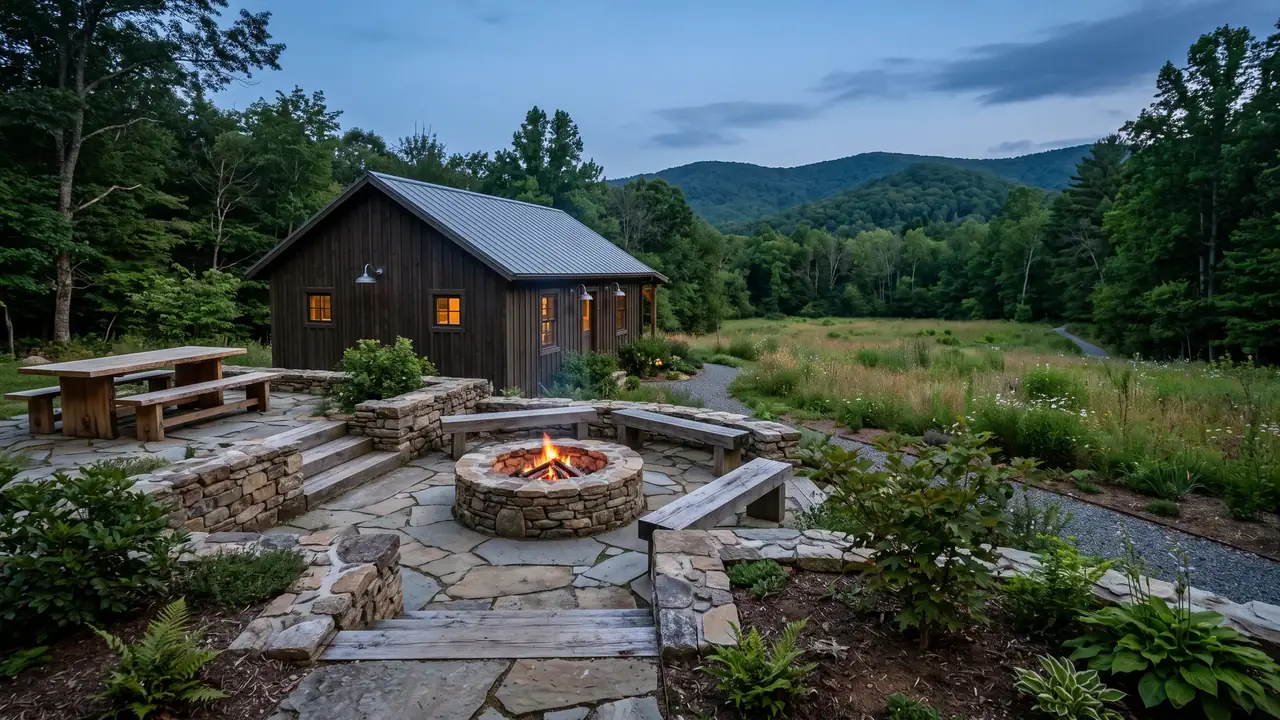
Retaining wall contractors in Floyd, VA build stone and block walls that hold steep ground in place, terrace a garden or create a flat patio area on a hillside lot. Freeze-thaw at the county's 18-inch frost line slowly works walls with shallow bases out of level, so base depth and drainage come first. This site is a request service, not a builder, and names any provider before you agree.
For the homeowner in Floyd, Virginia weighing a wall - one that holds back a slope, frames a garden, or gives a patio a seating edge - this page explains what sound construction involves, why this county's ground and weather punish shortcuts, and what to check before anyone digs. The outcome is a project description a reviewer can read and, with your approval, carry to a named provider.
What does a Floyd retaining wall contractor build?
A retaining wall does most of its work out of sight. The ground is excavated to firm subsoil, a compacted base is built, and the first row of block or stone is buried below grade so the wall cannot slide forward. Behind it, free-draining stone packed around a drain pipe gives trapped water a way out, and geotextile fabric keeps fine soil from clogging that stone over the years. Backfill goes in compacted lifts as the wall rises.
A seating wall or garden wall holds little or no soil, but it still needs a base that will not settle unevenly, and a seating wall needs a cap set at a height that is actually comfortable to sit on. Seating walls are usually planned with a patio, so the patios and pavers page is worth reading alongside this one.
When is a wall the right answer for the yard?
A true retaining wall earns its name when the ground must hold two different levels, one on each side of the stone. Around here that usually looks like:
- cutting into a hillside to make a level patio or lawn area
- supporting the bank beside a driveway or parking pad
- stopping a slope that washes out with every heavy rain
A low edge is the better answer when the wall is really a boundary: framing a planting bed, defining the patio, or giving people somewhere to sit. A wall that only pretends to hold soil tends to be overbuilt and expensive; a wall that quietly starts holding soil without being built for it is the one that fails. Decide the job before the material.
Why do wall problems happen in this ground?
Water comes first. Regional planning profiles classify the Blue Ridge Province, which includes this county, as generally moderately sloped, with slopes in the 5 to 20 percent range, and no streams flow into Floyd County - the Little River gathers here from its East, West, and South forks as headwaters. Slopes that shed water and yards that sit above stream valleys both push runoff toward anything built to hold ground in place. A wall without drainage stone and an outlet stores that water, and saturated soil weighs far more than dry soil.
Frost comes second. The Floyd County building office publishes an 18-inch frost line depth among its local design criteria. Ground that freezes and thaws heaves, season after season, and a wall with a shallow base slowly rides that movement out of level. On the plateau, exposure to wind and weathering works on the visible stone as well.
The common warning signs are bulging or leaning along a section, caps that have cracked or shifted, and soil washing out through the joints. All three usually point back to water, a shallow base, or missing compaction.
What affects the cost of a wall project?
- Height and length. Taller walls need deeper excavation, more drainage material, and sometimes engineering.
- What it holds. A wall retaining a driveway or structure carries more responsibility than one holding a planting bed.
- Drainage. The pipe, the stone, and a legal, practical place for the water to go.
- Material. Segmental block, poured or faced concrete, and natural stone each bring different labor.
- Access. Slopes, fences, and distance from the road slow material and equipment.
- Removal. Taking out a failed wall adds excavation and disposal.
- Extras. Steps, caps, lighting, and integrated benches add work.
Should a failing wall be repaired or rebuilt?
Repair makes sense when the problem is small and local: a few loose cap stones, one short section that settled, a drain outlet that needs clearing - while the rest of the wall stands plumb and tight.
Rebuild is the honest answer when the lean runs along most of the wall, when the middle bulges, when there is no drainage behind it at all, or when it was never buried below grade to begin with. Cosmetic patching on a wall that trapped water rarely survives many winters of freeze and thaw. A rebuild also brings the chance to fix the drainage and base that caused the failure, which a patch cannot do.
How do you prepare a wall project request?
- Photos. One wide shot of the slope and wall together, close-ups of cracks or bulging, and a picture of where water travels or stands after a storm.
- Measurements. Rough length, plus either the height at its tallest point or the elevation change you want to hold.
- Surroundings. What sits above the wall and below it - driveway, trees, fences, buildings, streams.
- Access. Gate widths and whether equipment can reach the area.
- Goals. A level lawn, garden beds, extra seating, or erosion control.
Before describing the project, read the guide to low walls that keep the view open if a seating edge is what you have in mind, and the local permits page for grading thresholds, floodplain checks, and the call to Virginia 811. The services hub rounds out the other project types covered here.
Requests come from the Town of Floyd and across Floyd County, including Willis, Check, Copper Hill, Indian Valley, Alum Ridge and Simpsons, and from homes along the Blue Ridge Parkway near Rocky Knob. Distances and road access vary widely in the county, so a provider is suggested only when one can reach the job, and only by name with your permission.
Local rules on this page were checked on October 9, 2026. Rules change; verify current requirements with the responsible office before work starts.
Decide the next part of your project
Use these guides to compare the work, prepare better questions and connect the service plan to the actual property.