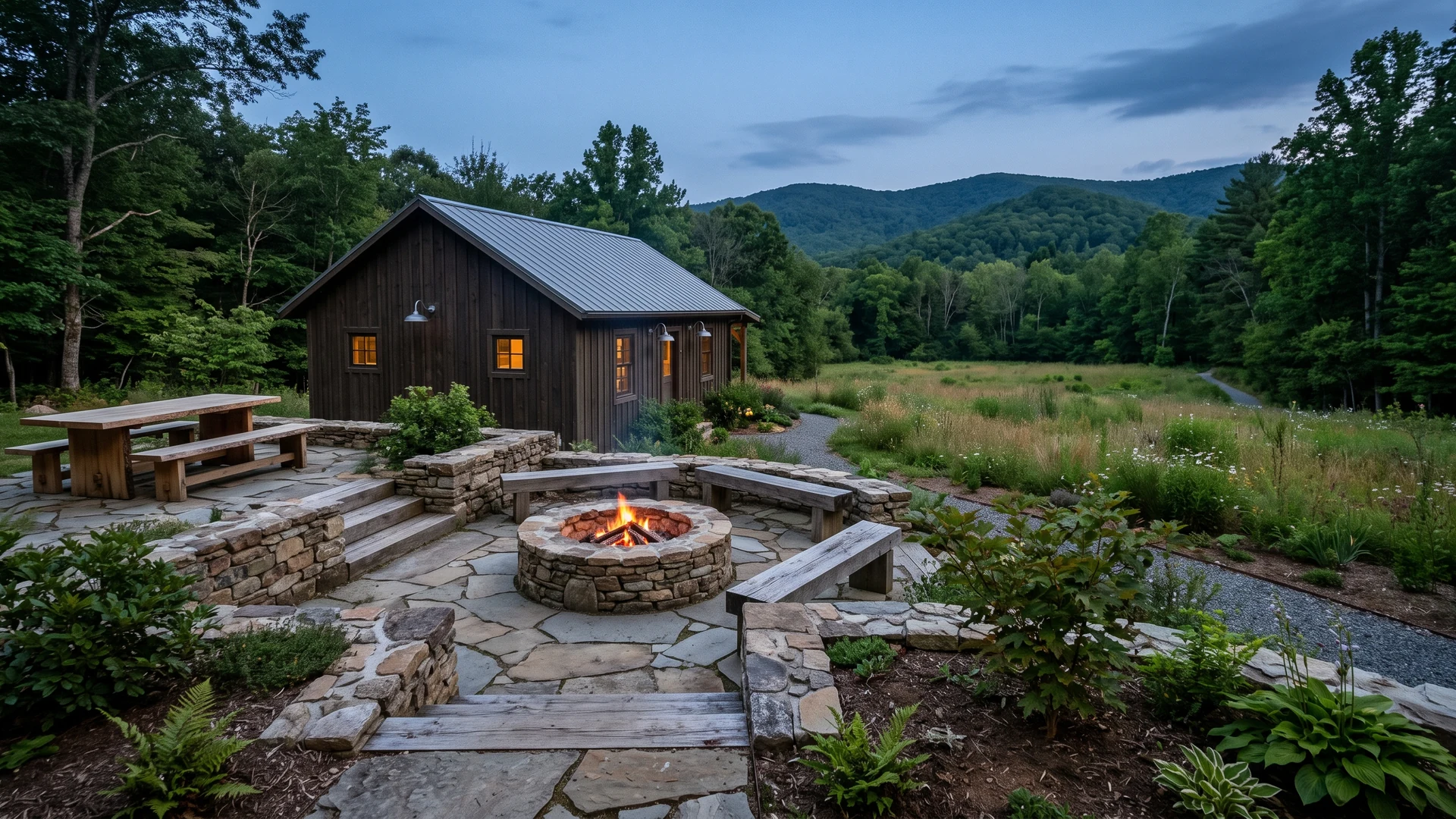
A fire pit or an outdoor fireplace can anchor an evening outside, and this page is written for the Floyd, Virginia homeowner weighing one. It explains what each kind of fire feature involves, how this county's wind, slopes, and fire seasons shape placement, and what to gather before describing the project. What you end up with is a project description a reviewer can understand and, with your approval, carry to a named provider.
What does building a fire pit or outdoor fireplace involve?
A built fire pit usually means excavating a shallow area, placing a compacted aggregate base, and setting stone, block, or a steel ring so the finished unit stays level through seasons of freeze and thaw. The base matters more than the visible ring: a fire feature set on loose or shallow ground can tilt or settle within a few winters.
An outdoor fireplace is heavier work. Masonry fireplaces need a footing below frost depth, a firebox, and a flue that carries smoke up and away from seating. A prefabricated or modular fireplace kit can reduce the masonry time, but it still needs a stable base and a clear path for smoke. Gas units add a fuel line, a shut-off, and in many cases an ignition system that needs electricity.
Either feature works best when the ground around it is planned at the same time. The patios and pavers page covers the seating surface a fire area depends on, and the walkways and steps page covers the routes people use to reach it after dark.
When does a fire feature make sense as the center of a yard?
A fire feature earns its place when the household gathers outside in the evening across more than one season. It can anchor a patio for meals and conversation, extend the use of a yard into spring and fall, and give guests a natural point to settle around.
It fits less well when the only level ground sits close to the house, under low branches, or on the side of the yard where wind funnels between buildings. In tight situations a smaller, simpler feature placed carefully usually works better than a large one squeezed in.
Why do placement problems happen in Floyd?
Floyd County sits on a high, rolling plateau of the Blue Ridge Mountains, roughly 1,500 feet above the Roanoke Valley, and the Blue Ridge Parkway runs along the edge of that plateau with long views to the east. Open exposure is part of what makes the views here worth protecting, and it is also what moves smoke. A fire pit placed in the open can push smoke across seating whenever the evening wind settles in from one direction.
The ground adds two more factors. Regional planning profiles classify the Blue Ridge Province, which includes Floyd County, as generally moderately sloped, with slopes in the 5 to 20 percent range, so many yards need some grading before a fire feature sits level. And the county building office publishes an 18-inch frost line depth for local design, which tells you how deep the ground here can freeze. A base that ends above that line can heave when the ground is wet and the temperature swings.
Wooded lots matter too. During the statewide 4 p.m. burning season described below, a fire near woods or dry grass is treated differently than one set in an open, mowed area. If you are still weighing which kind of fire feature fits your evenings, the fire pit or outdoor fireplace guide compares the two directly.
What affects the cost of a fire feature project?
Several factors shape what a fire pit or outdoor fireplace takes to build. Covering them in a request makes the review more useful:
- Type and size. A simple in-ground ring, a masonry fire pit, a kit fireplace, and a full masonry fireplace are different scopes.
- Fuel. Wood-burning features need clearances and wood storage; gas features need a fuel line, and gas work must be confirmed with the county building office.
- Base and grading. Sloped ground, loose fill, or a high water table add excavation and material.
- Utilities and distance. Trench length for gas or power, and how the seating area drains, both add work.
- Surrounding surface. A feature placed in the middle of a future patio changes how that patio gets built.
- Access. Material routes across a sloped or fenced yard slow the work.
How do built-in and portable fire features compare?
A built-in feature becomes part of the yard. It can be sized to the seating, matched to patio stone, and placed exactly where the wind and view work. In exchange, it needs base work, materials that survive weather, and a decision that is hard to reverse.
A portable fire pit or chiminea costs less commitment. It can move with the wind and be stored in winter, and it can be a reasonable way to test where a family actually gathers before anything permanent is built. It will not have the footing or durability of built work, and it usually does not anchor a designed seating area the way a stone feature does. Many households start portable on purpose, then plan a built feature once the habit of gathering is proven.
What should an outdoor-kitchen corner include?
When a fire feature is planned for meals as much as evenings, an outdoor-kitchen corner can be part of the same layout: a counter surface, a grill or cook surface, landing space for plates, and a route from the kitchen door. Each added element brings its own utility, clearance, and surface questions. Gas appliances and any electrical work should be confirmed with the Floyd County building office, which enforces the state building code locally, before the layout is fixed.
How do you prepare a fire feature project request?
A strong request describes the evening you want and the yard you have:
- Photos. One wide shot of the whole area, plus the sightline from the house and the distances to doors, decks, overhangs, and trees.
- Measurements. The rough area you want the fire feature and seating to occupy.
- Wind notes. Where evening wind usually comes from, if you know it.
- Ground notes. Slope, wet spots, and where water runs during heavy rain.
- Fuel preference. Wood, gas, or undecided.
- Questions. Anything you want a provider to answer before a design is set.
The local permits and rules page explains the burning season, floodplain checks, and the 811 call that come before digging, and the services hub rounds out the other project types covered here.
Local rules on this page were checked on October 9, 2026. Rules change; verify current requirements with the responsible office before work starts.
Decide the next part of your project
Use these guides to compare the work, prepare better questions and connect the service plan to the actual property.